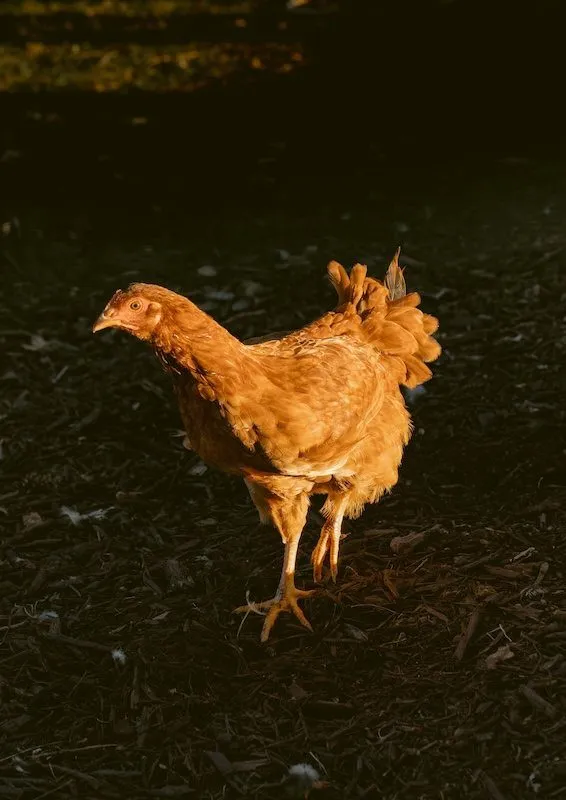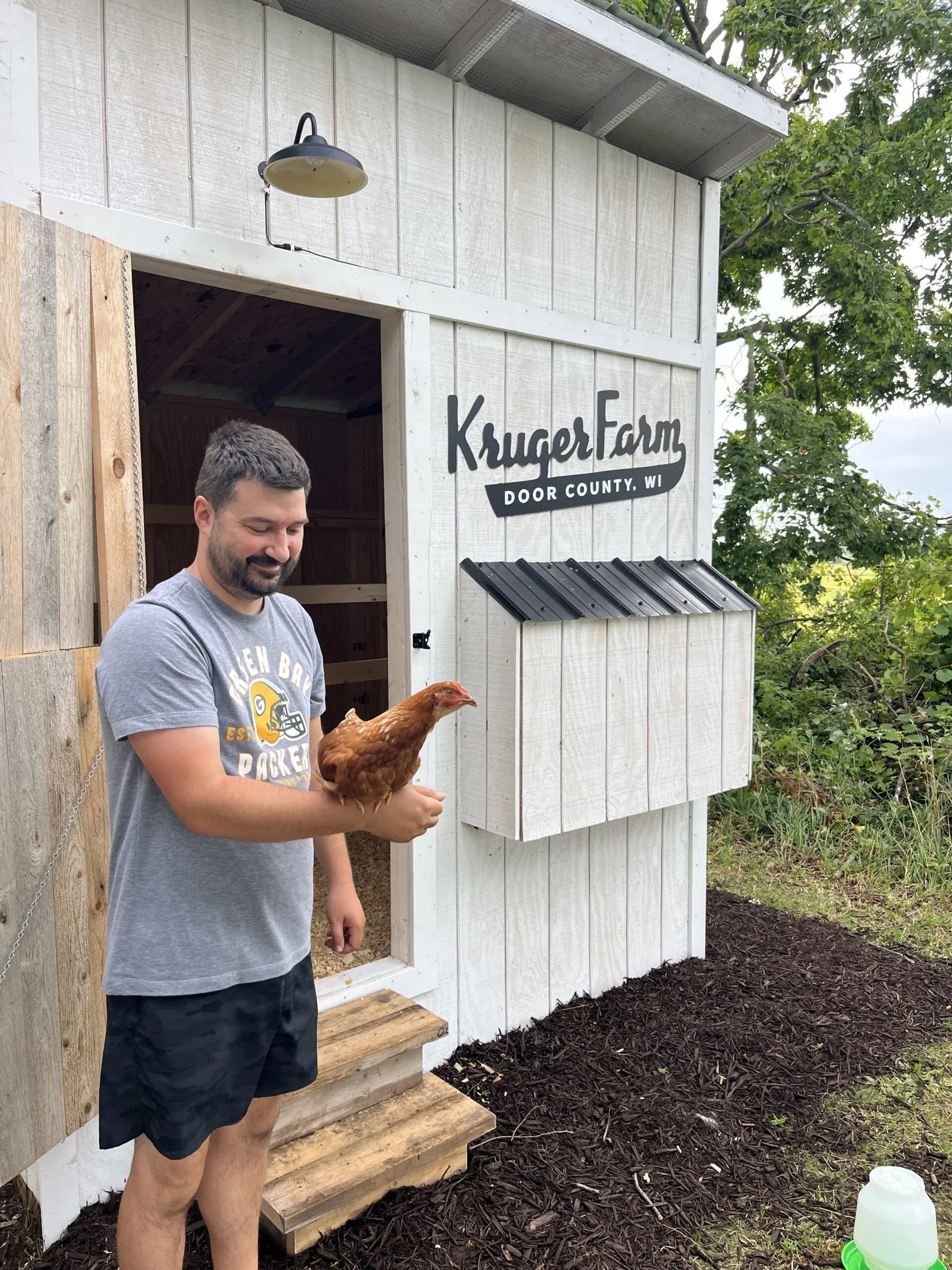


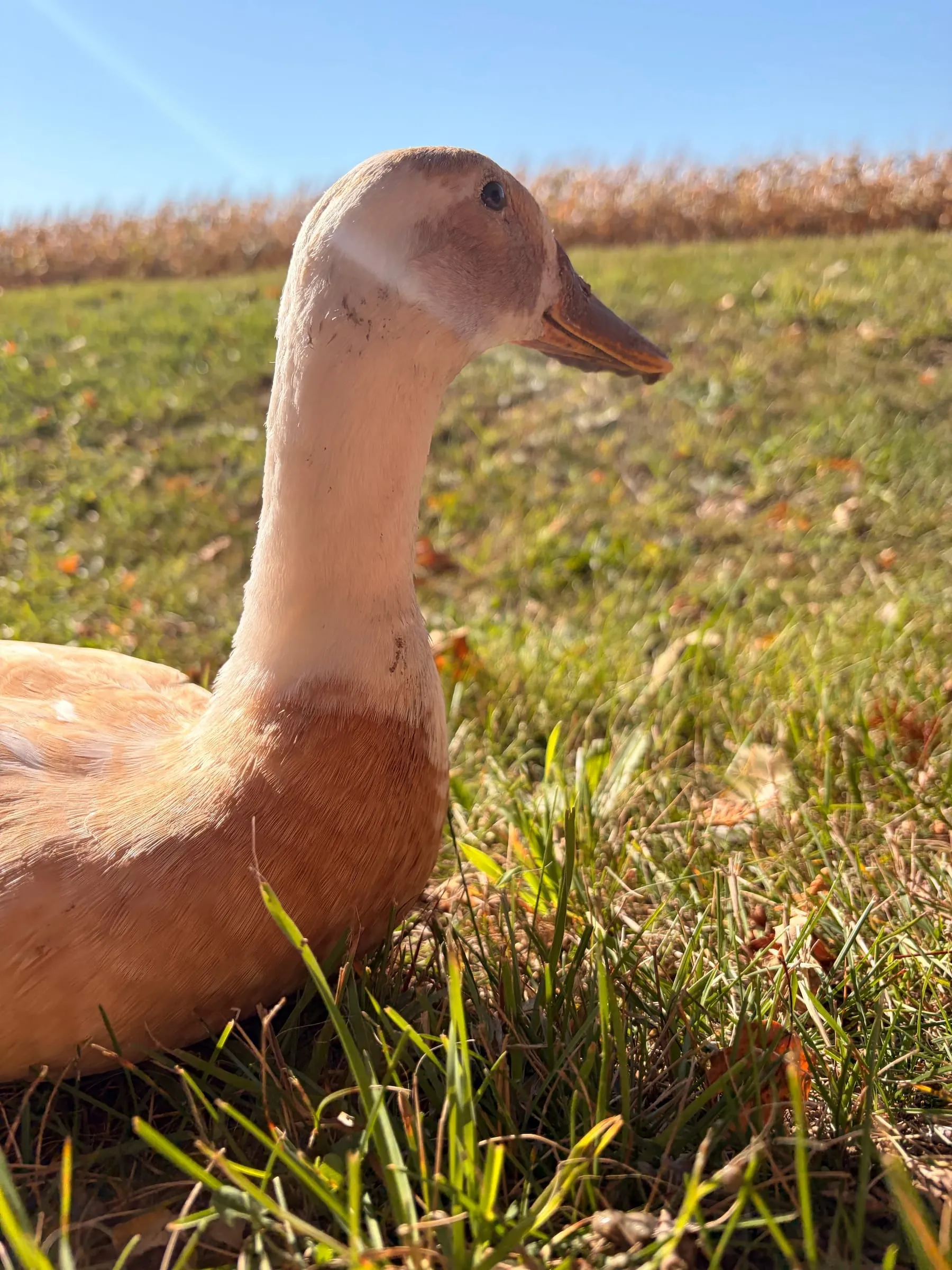
There’s no good way to start this one, so I’ll just say it. Clementine, our little fawn runner duck, passed away on Sunday.
If you read last week’s post, you know she was the duck in the quarantine cage, the one we suspected had hardware disease. We did everything we could think of for her, but in the end it was just too much for her body to handle.
Saying goodbye to Clementine
Sunday morning started like every other morning. We went out to let the ducks and geese out for the day, and we noticed Clementine off by herself, underneath the lilac bushes where the ducks always sleep. Mae went over to check on her, and she had already passed.
Mae is devastated. Clementine was one of hers in every sense, and losing an animal you’ve been nursing day after day hits in a particular way. You get your hopes up with every bite she takes, and then one morning the hope just stops.
We said our goodbyes and buried her behind the duck house, as close to it as we could get. It felt right that she stay near her ducks, even now.
Her twin sister, Marmalade, is now our only fawn runner duck.
What we learned, the hard way
Here’s the part I want every backyard flock keeper to hear. Ducks, geese, and chickens can be taken from you very quickly by hardware disease. It doesn’t take a dramatic event. It takes one curious bird and one small piece of metal.
We think it happened the week before, on free-range day. Clementine made her way over to our burn pile, which is full of nuts, bolts, nails, and screws left behind from old boards and projects, and ate something she shouldn’t have.
We had ordered a metal detector to try to confirm what was going on. It arrived a few hours after she passed. We held it up to her body anyway, and it went off. There was metal inside her. It didn’t change anything for Clementine, but it did answer the question we’d been asking all week.
That’s one of the hard truths about raising livestock: a lot of the time you learn the lesson the hard way, and too often one animal pays for it. We’re hoping this is a one-time situation. We’re also not leaving that to hope alone.
Hardware disease: what it is and how to prevent it
Hardware disease is the general name for problems caused when an animal swallows a piece of metal, like a nail, screw, staple, or bit of wire. Poultry and waterfowl are especially at risk because they forage by pecking and dabbling at anything small and interesting, and a shiny screw is about as interesting as it gets. Once it’s swallowed, metal can damage the digestive tract, and some metals (zinc and lead in particular) can also poison the bird.
I’m not a vet, and this isn’t medical advice. But here’s what we’re doing now, and what most flock keepers recommend:
- Sweep with a magnet. A rolling shop magnet picks up nails, screws, and fencing staples that you’d never spot by eye. Go over every area your birds range, not just the obvious spots.
- Fence off burn piles and scrap. Anything that’s been burned with fasteners in it is a buffet of loose metal. Keep birds out of it entirely, and clean up the ash before you give the area back to them.
- Walk the free-range area first. Before turning birds loose somewhere new, take a quick lap. Construction areas, old fence lines, and spots where you’ve been working on projects are the usual suspects.
- Keep project cleanup tight. Dropped screws in the grass don’t stay put. Pick them up as you go when you’re building near the flock.
- Know the warning signs. A bird that stops eating, isolates itself, seems lethargic, has trouble walking or standing, or has changes in its droppings needs attention fast. Ducks normally act like every moment is mealtime, so a duck that turns down food is telling you something.
- Call a vet early. If you suspect a bird swallowed metal, find a vet who sees poultry or waterfowl as soon as you can. They can X-ray and give you real options. A metal detector can hint at an answer, but it’s not a diagnosis.
The magnet on wheels and the treasure hunt nobody asked for
Since Sunday, we’ve bought a large magnet on wheels, the kind meant for picking up metal off shop floors, and I’ve been pushing it over our entire property.
Here’s the thing about living on an old farm: the yard is full of old, rusty, miscellaneous metal. Every pass with the magnet turns up something new. Generations of people have apparently been dropping things here and simply walking away, and I’m now the guy cleaning up after all of them.
If you’ve never done this on an older property, I’d recommend it, even if your birds have never had a problem. It’s oddly satisfying, it’s a little horrifying, and it’s a lot cheaper than learning the lesson the way we did.
A note on runner ducks and company
Ducks are social animals. They’re flock birds through and through, and runners especially tend to move, forage, and sleep as a group. If you ever lose one, it’s worth keeping an eye on the rest, particularly any bird that was closely bonded to the one you lost. Keeping a duck with other ducks (not just chickens) is the general rule for a reason.
On brighter news: the chick situation
Now for some good news, because we need it. The eleven surprise chicks are doing extremely well. They’re growing fast, eating like it’s their job, and generally having a great time.
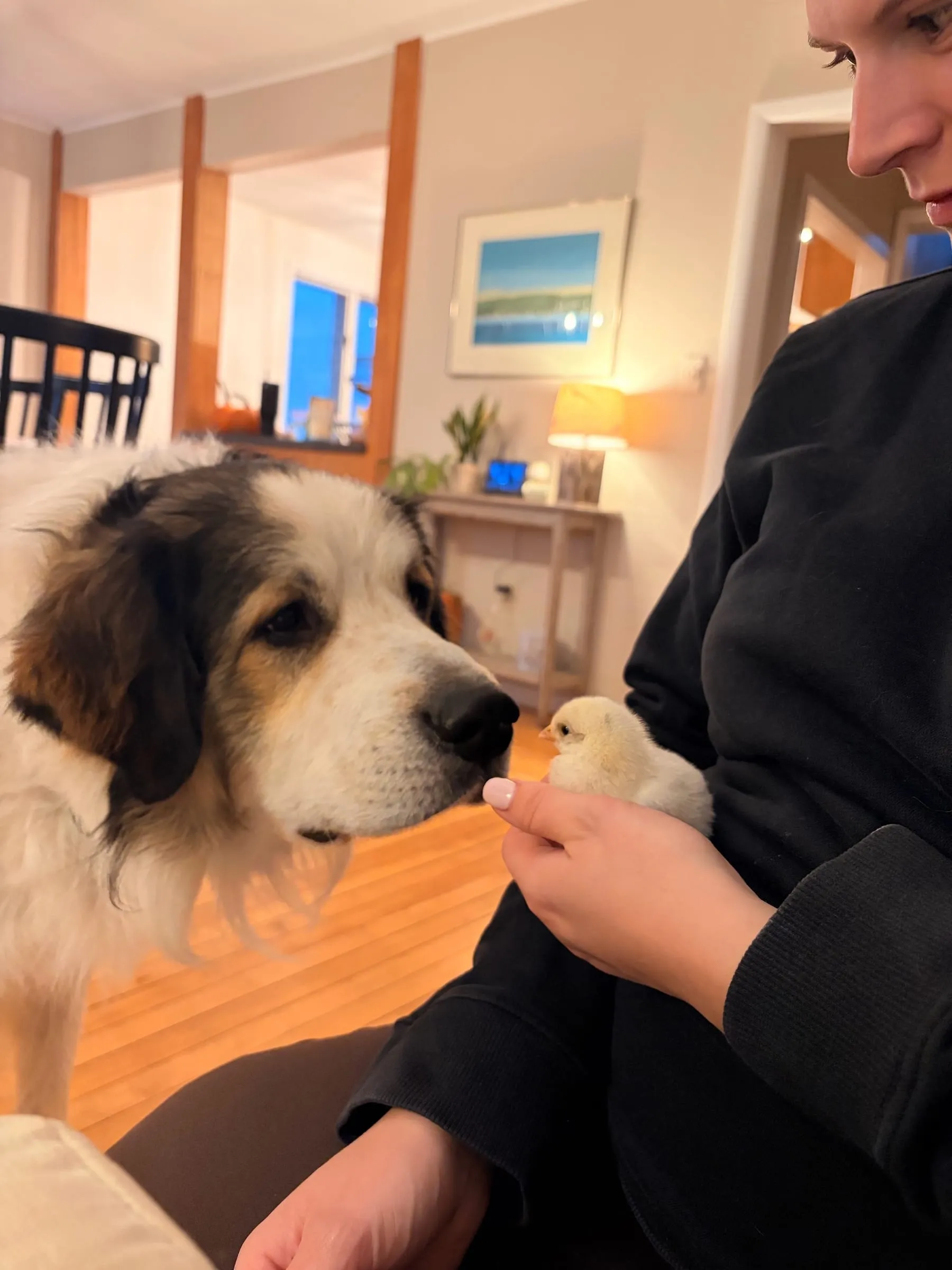
We’ve also started a new family game: guessing who the father is. For some of these chicks, there is more than one possible candidate, so we’ve been comparing traits and making our cases like amateur genealogists. It’s the most fun anyone has had with a paternity question.
If you want to play along with your own mystery chicks, here’s what people usually look at:
- Leg color. Yellow, slate, white, or green-ish legs are often inherited and are one of the easier clues early on.
- Feathered feet. Breeds with feathered legs tend to pass that on, at least partially.
- Comb type. Single, pea, rose, and other comb shapes can point toward one breed or another as the chicks grow.
- Down and feather color and pattern. Some patterns show up right away; others won’t be clear until real feathers come in.
- Ear lobes and skin color can add clues later on.
Genetics being genetics, none of these are guarantees. Mostly they just give you something to argue about at dinner.
The tote has officially been outgrown
The one problem with chicks doing well is that they keep getting bigger. Eleven chicks in a little tote is too small, so we need to expand their brooder soon.
A common rule of thumb is about half a square foot per chick for the first few weeks, then one to two square feet each as they grow and start testing their wings. For eleven chicks, that means a brooder that was fine on day one gets crowded fast. Crowding leads to pecking, mess, and stress, so the general advice is to size up before they make the decision for you. Give them room to move away from the heat lamp or brooder plate when they’re warm, too.
Meanwhile, in the workshop
Yesterday we went to Home Depot to pick up the lumber for the nursery book shelf for Charlotte, who’s due in December. I’ll be building it this weekend, with pictures and progress reports to come once it’s hung up.
If you’ve been following along, this is the same shelf we’ve been designing for the Kruger Farm Workshop, so you’ll get to see the plan put to the test by its first real builder. Me. No pressure.
Thanks for being here
This was a hard week on the farm. There’s a lot of life out here, but there’s also a lot of death, and the second part never gets easier. Thanks for reading, and give your birds an extra scoop of treats tonight. Then go take a lap around the yard and look for nails.
Goodbye, Clementine. We’ll miss you.