


Some weeks on the farm have a theme. This was not one of those weeks. This was a week of odds and ends, with a few major tasks mixed in, and a lot of time on the road. If last week’s post was the tidy October list, this one is what it looks like when you try to work through the list while life keeps adding things to it.
The short version: we’re getting ready for winter, and this past week was mostly about getting ready for this week. That’s a real phase of farming.
Two Shelves and a Lot of Miles
Let’s start with the workshop, since it’s the part that’s going well.
I started building Charlotte’s Book Shelf this week. It’s named after our baby Charlotte, as a dedication, so I’d like it to turn out well. I’m building it myself because a plan on paper is only a theory, and I’d like to find out whether the theory holds up before I hand it to anyone else. Better to discover the flaw at my own workbench, quietly, than in someone else’s garage while they look at my instructions with a very specific expression.
I also designed the plan for the wall-mounted charging shelf, and I picked up the lumber for it. So the plan is done, the boards are in hand, and the only thing standing between me and a finished shelf is me. I’ll probably start on it soon. “Soon” is doing some work in that sentence, but the lumber is already bought, which is a form of accountability.
The other thing that ate the week was driving. Mae and I spent a good chunk of it going back and forth to Green Bay for hospital checkups on baby Charlotte, who we call Charly, and who’s due in a couple of months. I’ll keep the details to ourselves. The headline is that we’re in the home stretch of a long wait, and we now know that road better than we ever planned to. Trips like that eat a day in a very particular way, and the chores did not agree to take those days off.
The Leaf Blower and the Leaf Pile
We bought a new EGO leaf blower this week. We already have a few other EGO tools that we picked up this year, and we’ve been very happy with all of them, so adding one more was an easy call. At this point we’re a battery ecosystem with a farm attached.
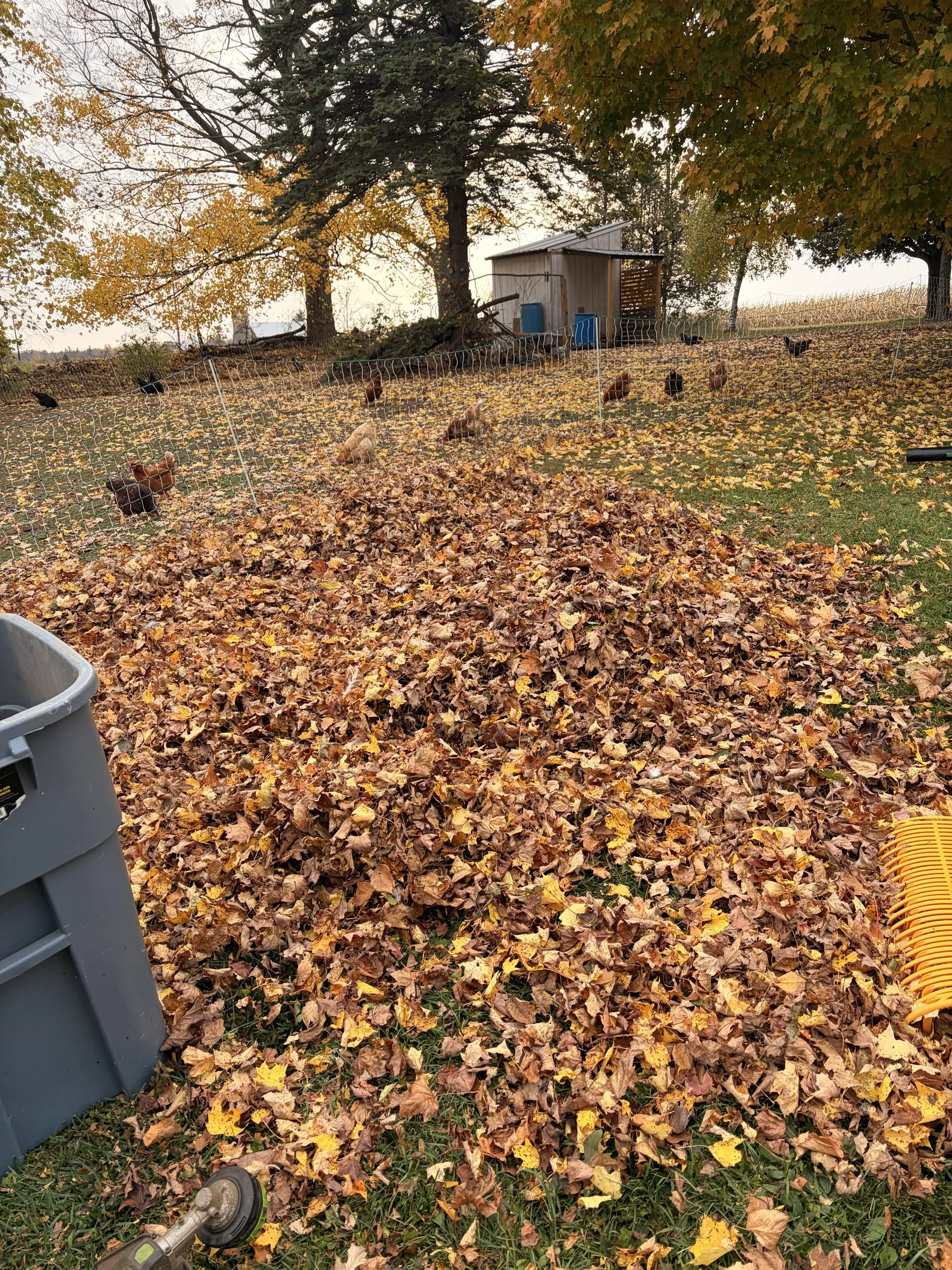
I put it to work right away. I blew leaves across part of the yard and part of the pasture, and pushed everything into one big pile in a corner. If you’ve never moved that many leaves with a blower, it’s more satisfying than it has any right to be. The leaves don’t go away. They just agree to be somewhere else.
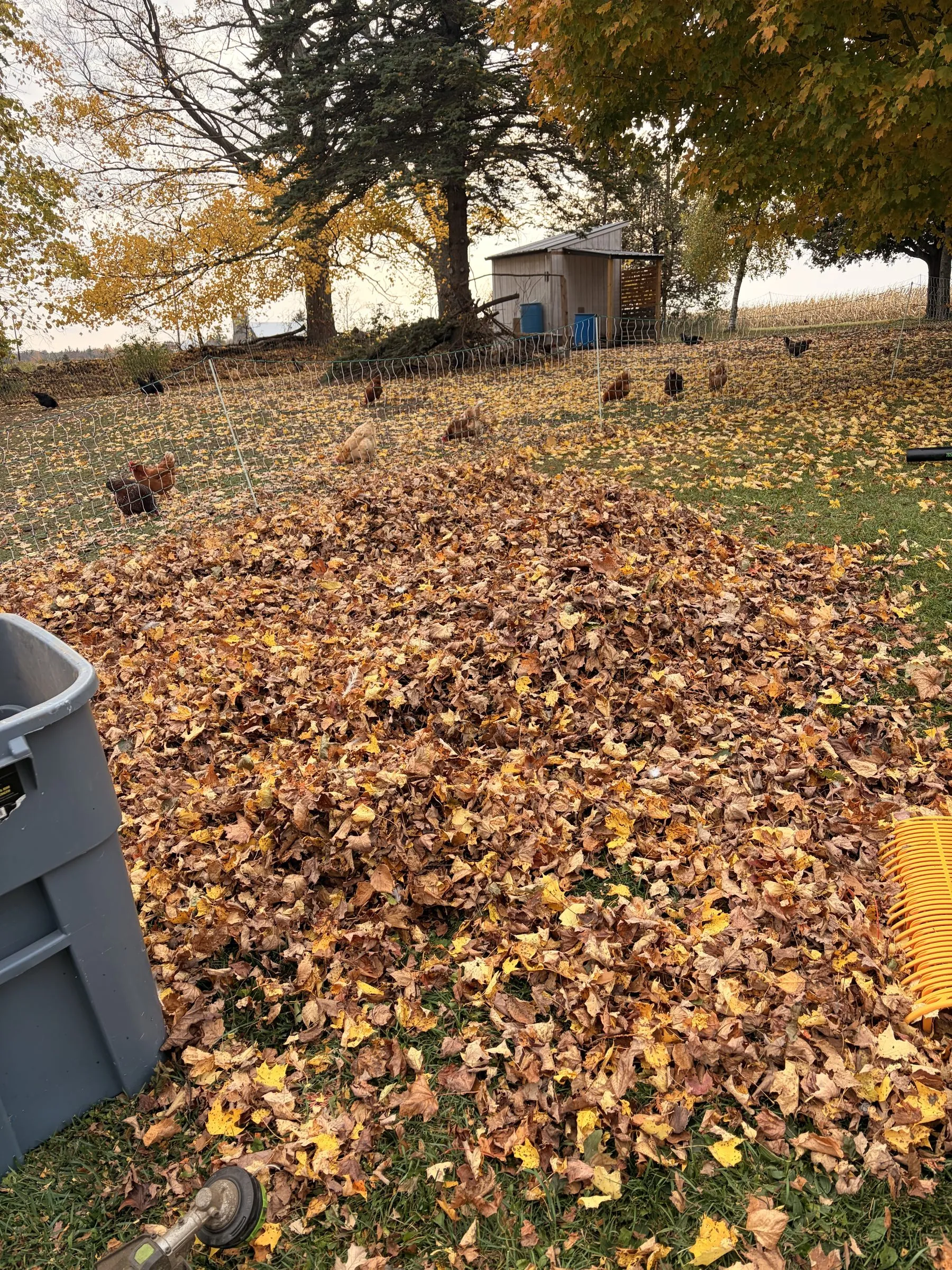
The somewhere else is temporary, because the plan is to shred those leaves and put them on the field as compost material. Here’s the general reasoning, in case you have a yard full of leaves and a nagging feeling that bagging them for the curb is a waste.
Leaves are what gardeners call “brown matter,” meaning they’re high in carbon. Fresh green material, like grass clippings and kitchen scraps, is high in nitrogen. A healthy compost or soil-building system needs both, and most of us have far more of one than the other. Shredding matters because whole leaves tend to mat down into a soggy sheet that breaks down slowly, while shredded leaves break down faster and mix into soil more easily. I’d like to get to the shredding before the weather turns the pile into a project.
The Field: Garlic, a Fence, and a Tarp
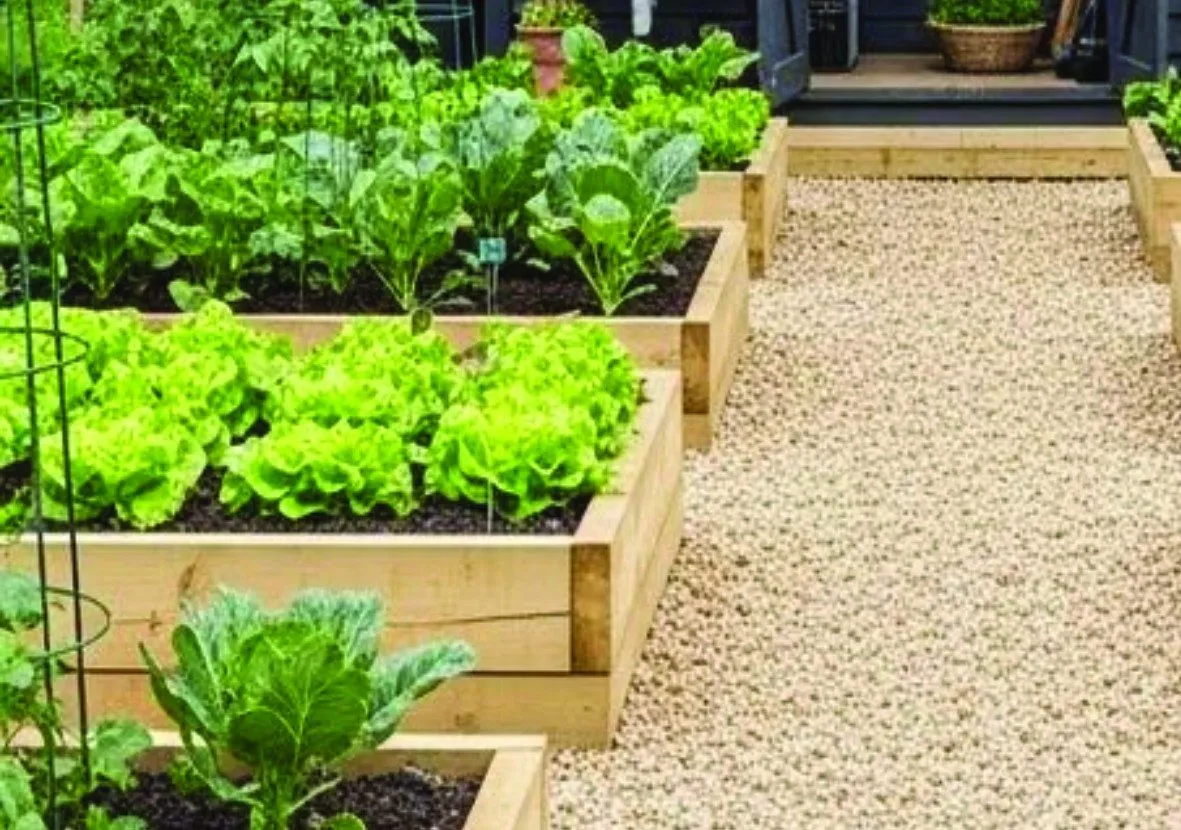
We’re also getting the new field planned out, and the first order of business is garlic.
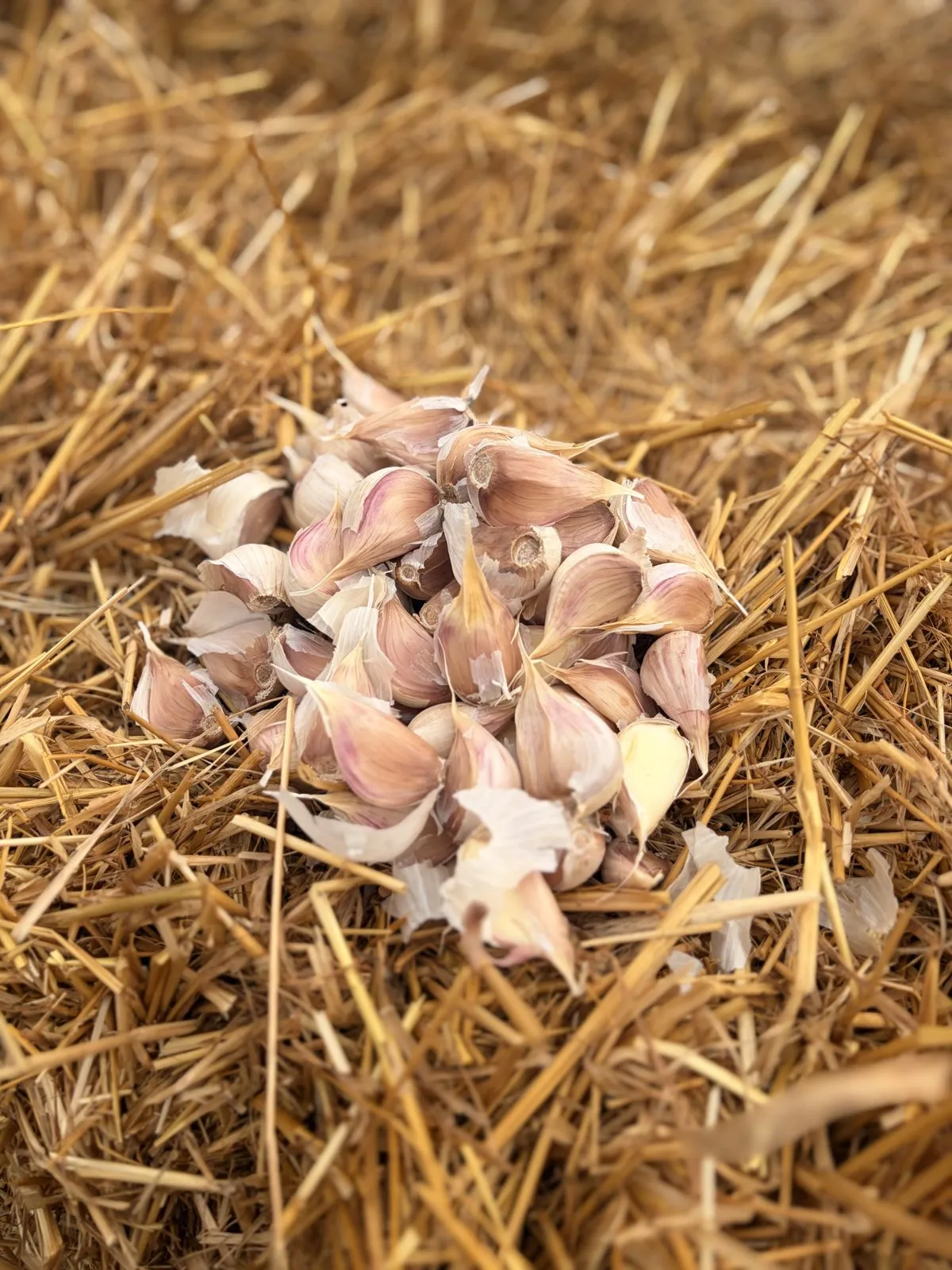
Garlic is one of the few things you plant in the fall instead of the spring. As a general rule, the cloves go in a few weeks before the ground freezes. That gives them time to put down roots, then they sit through the winter and take off when things warm up. Garlic has never cared what the rest of the garden is doing.
The plan is to fence off the garlic area so nobody walks across it or disturbs it while it sits in the ground over winter. “Nobody” includes us. It also includes a flock of birds whose entire personality is walking across things.
The other piece of the field plan comes soon: tarping. The idea is to cover the new field with tarps so the grass underneath can’t grow, and ideally dies off over the winter. As a general approach, it’s a way to turn a grassy spot into a planting area without a lot of digging. No light means no photosynthesis, and after a few months you have something much easier to work with come spring. It’s mostly stretching, weighing things down, and then walking away, which is a legitimate farming technique.
Fresh Bedding, a Big Bag of Scratch, and a Plan for the Old Stuff
Yesterday we picked up supplies for all-new bedding, along with new feed and a few treats the birds like.
The treat I’ll mention by name is chicken scratch, a mix of corn and grain. We got a big bag of it, and we give it to the flock as a little winter treat. As general advice, scratch is the dessert, not the meal, and like most dessert it works best in moderation. The birds, naturally, treat it like a major event.
The bedding is the bigger job. Probably tomorrow, or sometime later this week, we’re going to clean out the chicken coop and the duck house and put all that old bedding on the field. The plan is to till it in as organic brown matter, then refill both buildings with fresh winter bedding.
We swap bedding about every six months, or right around there, and it’ll get swapped again in the spring. We do it because it keeps the coop cleaner.
For the general-advice portion: used coop bedding is a great soil amendment, because it combines the carbon in the bedding with the nutrients from the droppings. The usual caution is that fresh manure can be “hot,” meaning too strong for growing plants, so it generally works better when it has had time to break down. Fall is a good time to do it, because winter does a lot of that breaking down for you. Spread it on a field with nothing growing yet, and it has months to mellow before anything has to live there.
The Chicks Are Growing Fast
The 11 chicks are doing well and growing fast. I’d rather give you a short true update than a long made-up one.
Pumpkins, Now and Later
We bought some pumpkins to decorate the house, and they’re currently on the chicken coop. It looks very festive, in a farm-adjacent way, and the chickens haven’t commented.
The pumpkins have a plan, though, and it’s the same one every year. When the fall season comes to an end, we take them down and smash them on the ground. Then the chickens eat them, and they absolutely love it. The pumpkin spends a few weeks as decor and then retires into a poultry snack, which is a better career than most.
The Geese Have Discovered Leverage
Now we get to the problem of the week.
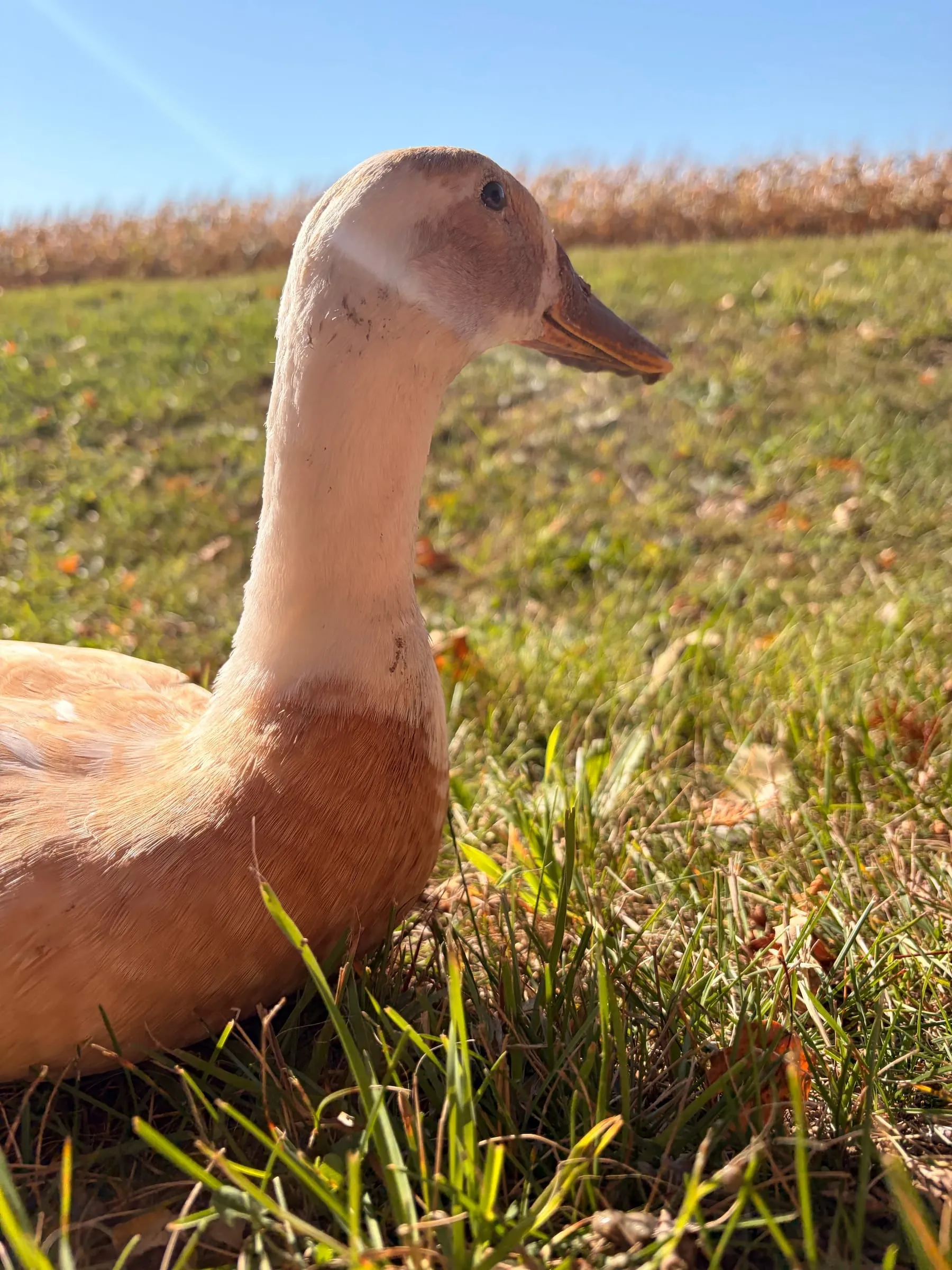
We found out that the geese have figured out they can walk up to the flexible parts of our fence and push into it with their big bellies. The fence gives, and it knocks over. We currently use electric netting, which is great for herds or for keeping animals penned for a while. The trouble is the stakes that hold it upright. They only go about 4” into the ground and they’re cylindrical, so they’re easy to knock over, which turns out to be all a goose needs. Once the geese are through, the ducks follow them over in one big group, like a parade that nobody organized and everybody joined.
I want to be fair to the geese here. This is genuinely clever. It requires nothing but body weight and confidence, both of which geese have in surplus, and it’s the kind of discovery that doesn’t get un-made. The ducks could not have come up with it on their own, but they’re extremely willing to follow someone who did.
So the fence needs reinforcing. That’s the job. The plan is to pound in either U-channel or T-posts and wire the fence to them, so it’s held up by something that doesn’t fold over when a goose leans on it. We haven’t picked between the two yet. I’d like to get it done before the geese get any better at this.
What This Week Is Really About
If I step back, this was a week of getting ready for the week after. The leaves are in a pile waiting to be shredded. The field is planned and waiting on garlic, a fence, and a tarp. The bedding is bought and waiting for the coop to be emptied. The charging shelf lumber is waiting for me to stop making excuses.
That’s what late October feels like around here. Nothing is finished, but everything is in motion, and if you do it right, the winter version of the farm is a lot quieter than the fall one. I’ll take that trade. I’d also take a goose who respects a fence, but I’m trying not to be greedy.
If you have a goose-proof fence trick, or a favorite way to use up a pile of fall leaves, I’d like to hear it. The geese, I assume, are already working on their next move.
Notes from readers.
Your name and a comment. An email is optional and stays off the page.
No notes yet. The first one is welcome.